
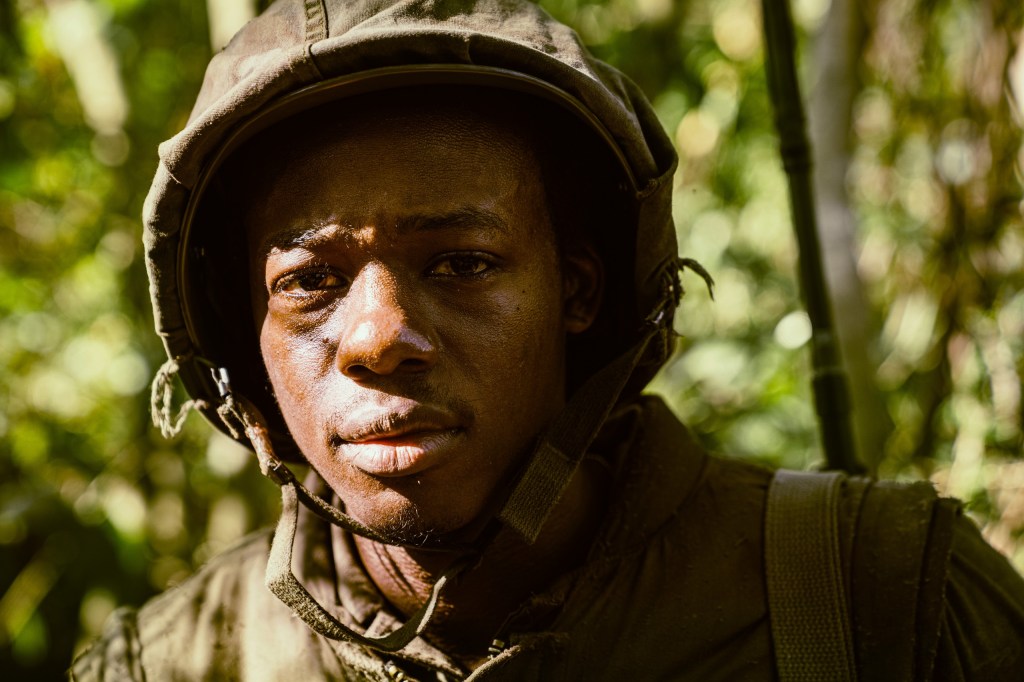
Shell shock and bottled-up guilt. Mr Nelson, why did you kill people?
Seen at the 83rd Venice Film Festival. Mr. Nelson, Did You Kill People? opened in Japanese cinemas on 11 September 2026.
Mr. Nelson, Did You Kill People? is Shin’ya Tsukamoto’s second English-language feature, which premiered at the 83rd Venice Film Festival as a competition film with a horrifying depiction of what it means to fight in a brutal war and its aftermath for a shell-shocked soldier. It is at times chaotic and loud, which isn’t always a bad thing. No matter how the film evolves, it leaves an unmistakable impression on the viewer simply because of the cruelty shown. It feels real not only visually, but because it is in fact adapted from the memoir of Allen Nelson, a Vietnam War veteran who told his stories and the reality of the war to the world in over 1,200 talks.
The film opens on the mental state of a freshly out-of-war young Allen Nelson, who is homeless and gets frequently triggered by the everyday sounds and chaos around him. Shortly into the film, his old school friend, who is now a teacher, asks him if he can speak about the war at school. During his talk in the classroom, Allen Nelson gets asked the question by a little girl: “Mr. Nelson, did you kill people?” which clearly brings out a trauma in him and sends the film deeper into his story. From then on, we jump between two Nelsons: the younger Nelson in Vietnam and in the wreckage right after it (played by Mark Merphy), and the older Nelson (played by Rodney Hicks) in his therapy sessions where he is trying to make sense of PTSD years after the war and why he killed people.
The best and worst scenes in the film emerge from the stories Allen Nelson tells in his therapy sessions with Dr. Daniels (Geoffrey Rush), partly because these therapy sessions fill almost the entirety of the film. The gruesome flashbacks from his time in Vietnam leave a trace of horror and grief. This is not a mere repetition of the same Vietnam War story we have seen over the years; it is a fresher, more personal look at the war, depicted blatantly. The scenes are without reserve and are here to show us different aspects of humanity and war. And Shin’ya Tsukamoto exactly aims to do that. Thus, the film’s best scenes come out of the reality of war, how it affects actual families, and how the cruelty within people can manifest itself on the battlefield.
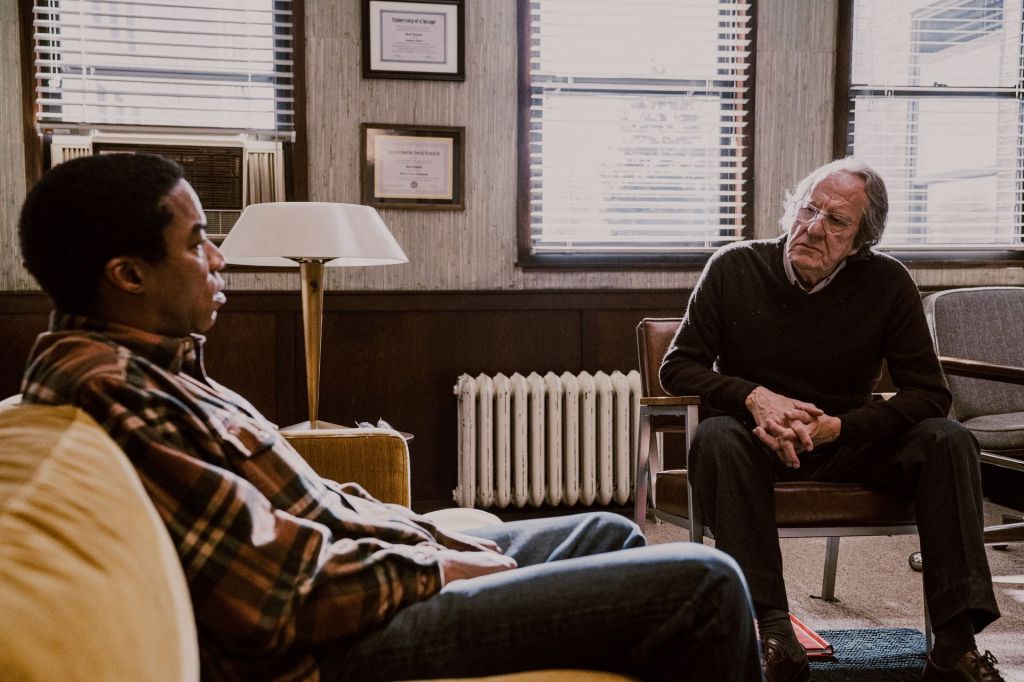
On the other side, the weaker scenes in the film emerge from the therapy sessions where, session after session, Allen Nelson cannot seem to find an answer to the question “Why did you kill people?”, asked by Dr. Daniels. Rodney Hicks showcases a performance which makes it clear to the audience that Allen Nelson is not yet ready to answer that question. However, the scenes start feeling somewhat amateurish when the same question is asked more than its fair share of times and Nelson gives an identical reaction each time with no progression until the very end. Still, it is obviously crucial to the story that Allen Nelson face the why of what he did, and the moment lands fairly well when Allen finally has the courage to answer it truthfully (even though the film doesn’t end there, as it might have).
“By the way, Allen, why did you kill people?”
“Because it was war.” “Because if I didn’t kill, I would have been killed.”
Alongside Allen’s deeply buried guilt and the story revolving around that, we never get a deeper look into his family, who are not elaborated enough for us to feel anything for them. By the end of the film, the family sequences leave one questioning what they actually did for the film besides existing as background characters in Allen’s life, despite Tatyana Ali’s passionate performance as his wife. There are also many scenes which feel redundant and might as well not have made the final cut; and more than once, a certain feeling lingers that the film could have ended before its actual end.
Shin’ya Tsukamoto makes a film that most certainly evokes emotions with its graphic and violent camera play, which is very much his own: he wrote, shot, and edited the film himself, as he has since Tetsuo: The Iron Man. Yet the film delivers sometimes less and sometimes more than needed, and cannot seem to find a balance which might have kept the audience invested throughout rather than in parts.
Directed by Shin’ya Tsukamoto
Written by Shin’ya Tsukamoto, based on the book by Allen Nelson
Starring Rodney Hicks (Allen Nelson), Geoffrey Rush (Dr. Daniels), Mark Merphy (Young Allen), Tatyana Ali (Linda), Lily Franky (Kuroi)

Leave a comment