
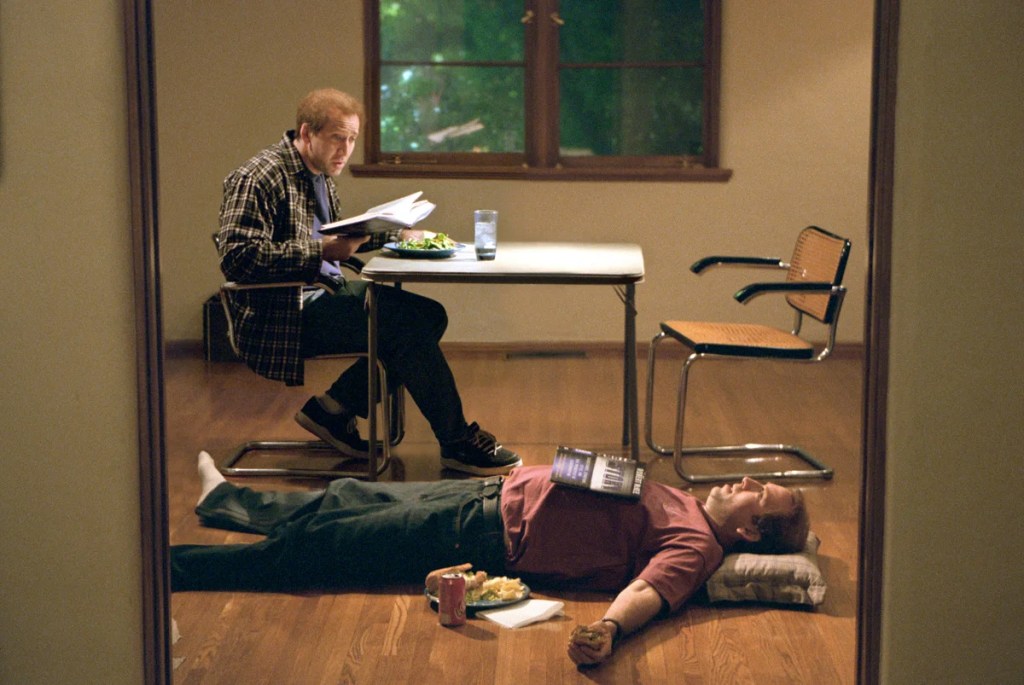
Charlie Kaufman and Spike Jonze’s 2002 classic, revisited for its timeless originality.
Released in US theaters by Columbia Pictures on 6 December 2002.
In between recent film screenings, my heart desired to write a review of this beautifully made film that, despite its Oscar win and other awards, has never quite found the audience it deserves since its release in 2002. Adaptation, written by Charlie Kaufman and directed by Spike Jonze, the duo behind Being John Malkovich, is gripping from the first minute, and it is a screenplay masterpiece with brilliantly curated dialogue and effortless transitions between scenes. It is about orchids, you might say, just as the film was originally intended to be, but it is also just as much about a scriptwriter trying to write a film on orchids, adapted from a book about orchids. It manages to run these different but intertwined plots simultaneously without overwhelming the mind, with just enough fun and plenty of thrills.
Adaptation starts with an introduction to Charlie Kaufman played by Nicolas Cage. We first meet him on the set of Being John Malkovich, standing awkwardly on the side, almost invisible to everyone around him. We then watch Charlie as he meets Valerie (Tilda Swinton) and pitches his idea to write a screenplay for an adaptation of a book called The Orchid Thief by Susan Orlean (Meryl Streep). Charlie wants to write a script that is not full of Hollywood clichés and the usual climaxes; he just wants to make a film about flowers, as simple as that.
Funnily enough, the real Charlie Kaufman, the scriptwriter of this film, was also given the job of writing a screenplay for the adaptation of this book. And it almost feels like we are watching Charlie Kaufman’s own journey of writing this film: the struggles he goes through to make the screenplay perfect, to understand the author of the book, and to overcome his writer’s block in writing the film. The vulnerability he shows in the film gives a different kind of intimacy to the audience. Usually, it is not hard to find a part of Kaufman in his work, but this time we quite literally see him as the centerpiece of this story. A never-ending story loop where Kaufman has written a film about a writer writing a film about a writer… and so on.
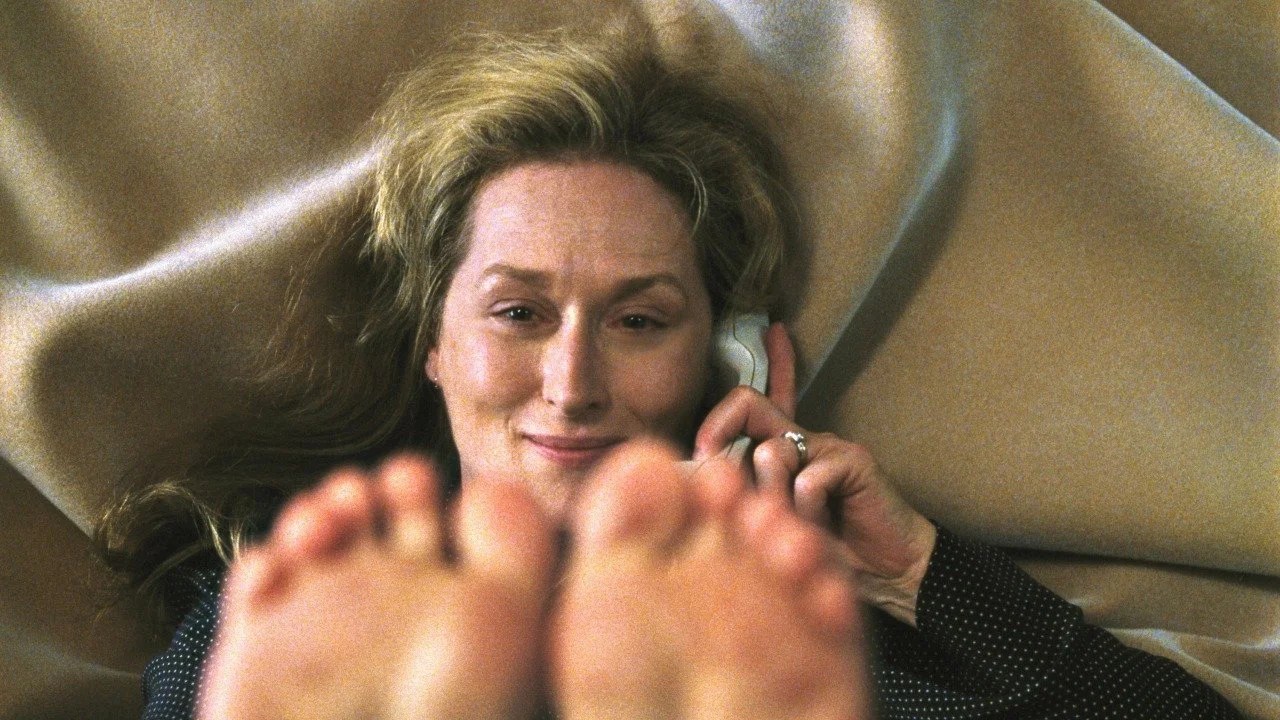
As Charlie struggles with writing the script and understanding the book, we simultaneously dive deep into the story of the book, narrated by Meryl Streep’s Susan, including her meeting with the orchid thief, John Laroche (Chris Cooper), a plant dealer who was arrested for taking rare ghost orchids out of a protected swamp. While Charlie is lost in the screenplay and is constantly asked by Valerie for updates on the script, he is also regularly bothered by his twin brother Donald Kaufman at home, also played by Nicolas Cage.
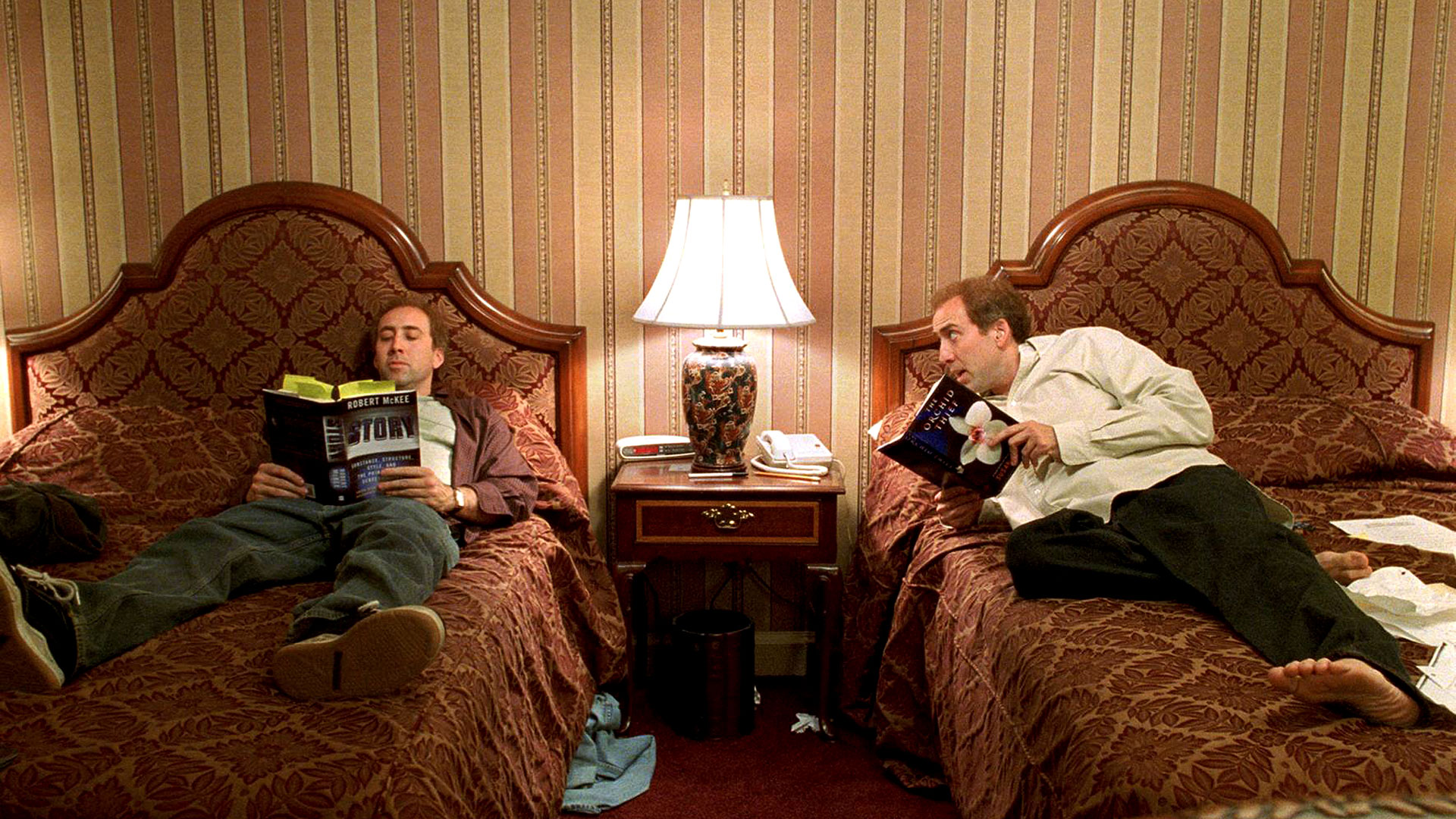
Donald Kaufman does not exist in real life, yet he is credited as the film’s co-writer, and “Charlie and Donald Kaufman” were even nominated together for the Oscar for Best Adapted Screenplay. It makes us wonder whether Kaufman wanted to put Donald as the more naive and innocent side of him, who is never jealous, is always loving, and just embraces the world with all its ups and downs. Charlie, on the contrary, is quite negative towards life, is obsessive in nature, judgmental, and overthinks things to an extent that he cannot even muster the courage to talk to the author of the book. One of the main contrasts is that Donald also wants to write a movie script, though he comes up with exactly what Charlie protests against: a superficial script full of Hollywood clichés, a serial-killer thriller called The 3. Charlie sees him as his dumb counterpart and does not make much of him until Donald finishes his script way earlier than Charlie can ever finish his, and Donald even sells his script for a small fortune, with Charlie’s agent calling him a genius. From then on, Charlie unwillingly starts taking Donald seriously, and Donald has a lot to teach Charlie about life and how to live it. Charlie even goes to a seminar by the screenwriting coach Robert McKee (Brian Cox), whom Donald had recommended, and McKee’s advice turns the film from a simple film about flowers into exactly the Hollywood thriller that Charlie had sworn against.
Donald Kaufman: “You are what you love, not what loves you.”
Often, when an artist gets too obsessed with their work, it can get messy and inescapable; however, this film is where Kaufman’s obsession comes to fruition. In Synecdoche, New York (2008), his directorial debut and truly a beautiful film, we see him trying perhaps so hard to make the film perfect with all its details that it slightly surpasses the satisfying threshold of complexity. But fortunately, Adaptation never feels too complex or too simple; it is just a joy to watch from beginning to end, and Kaufman seems to have found the ideal balance before he decided to get more complex in his other surreal takes.
He manages to write not one, not two, but four main characters, each with their own story without any of them feeling redundant. Charlie with his struggle with the script, his brother Donald with his own script as the naive counterpart of Charlie, Susan writing the book and living it, and the charming orchid thief John Laroche with his nonchalant way of living and pursuing rare flowers. And how it all blends so gracefully. And how they are all played by undoubtedly talented actors. Nicolas Cage does not for a second make the audience doubt that Charlie and Donald are two different people; he fully embraces both characters with all their quirks, which earned him an Oscar nomination for Best Actor. Meryl Streep shows a wide range, from the hopeful, naive author to a Susan who wants to explore and try new thrills in life, a role that won her a Golden Globe and an Oscar nomination. And Chris Cooper, who won the Oscar for Best Supporting Actor for this role, portrays the orchid thief, who is supposed to be someone dangerous, but is just as charming.
Charlie Kaufman and Spike Jonze create what one could call a masterpiece, with different yet skilfully connected storylines, clever dialogue, and never-ending thrill that we rarely see all in one film.
Directed by Spike Jonze
Written by Charlie Kaufman and Donald Kaufman, based on the book The Orchid Thief by Susan Orlean
Starring Nicolas Cage, Meryl Streep, Chris Cooper, Tilda Swinton

Leave a Reply