
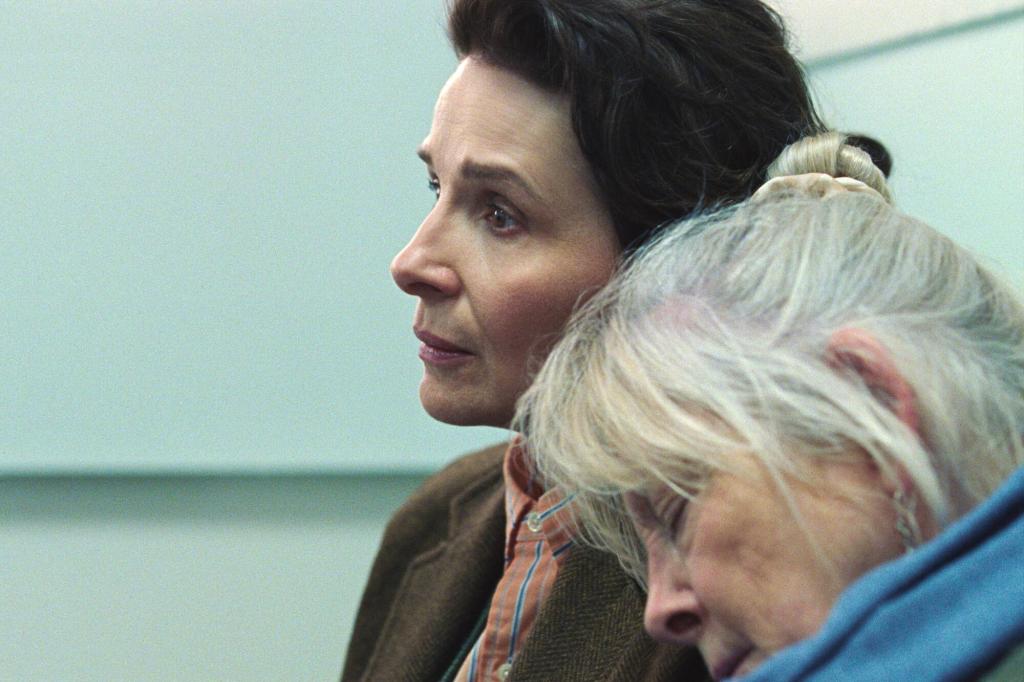
How can you tell if the decisions made for you are right for you, when you hardly know yourself?
World premiere at the 76th Berlin International Film Festival, 17 February 2026, where it won the Silver Bear Jury Prize. Screened at the 64th Viennale – Vienna International Film Festival.
An utterly real and devastating look at one of the possible consequences of old age: dementia. Queen at Sea depicts dementia and what it looks like for the closest loved ones, in a minimal setting with few actors at play. There is no need to overdramatize it when one is already overwhelmed with the weight of an unspoken loss of self, a self who was once a mother and a wife. And a wife that a husband who can hardly look after himself is trying to hold onto.
Lance Hammer comes back to cinema 18 years later with Queen at Sea, a somber, realistic story about a woman, Leslie (Anna Calder-Marshall), at age 75, suffering from dementia, as her daughter Amanda (Juliette Binoche) and husband Martin (Tom Courtenay) try to navigate the decisions about what awaits her. The first scene of the film opens on Leslie and Martin having sex when Amanda enters the house and immediately cuts it off, frustrated by the numerous times she has caught her stepdad, Martin, doing that despite her mother having been deemed no longer capable of consent by her doctor. However, Martin believes that this is good for her psychologically and that it helps her dementia, pointing out that it is often Leslie who initiates it. Even though he is the sole caretaker of Leslie, her daughter Amanda has no choice but to call the police after having warned him she would do so.
As the story quickly unfolds with the events that follow, we get introduced to the world of Leslie, seen from the outside only, yet felt deeply on the inside through the profound acting that Anna Calder-Marshall displays, especially through her immaculate play of eyes, with which she shows fear, confusion, love, and stubbornness just like a child would; a child that doesn’t get more conscious and lucid by the day, but quite the opposite.
We move between scenes of choices made around Leslie’s life, and it feels painful for the audience to watch her as the main character who somehow still comes off as a side character in her own story, where she can hardly utter the words on her mind when she doesn’t even know herself what her mind carries.
Martin, though initially portrayed as guilty of exploiting a woman not capable of giving consent, verily loves Leslie and wants the best for her. And as we witness Leslie and Martin’s relationship on screen, and how she misses his presence when he is detained, or how she is sometimes the one who craves the intimacy in the first place, we are left unsure of what is actually right for her, and who should be with her in this last chapter of her life. And so is her daughter Amanda, who was concerned about them having sex to begin with, and who wanted Leslie to be looked after at a care home.
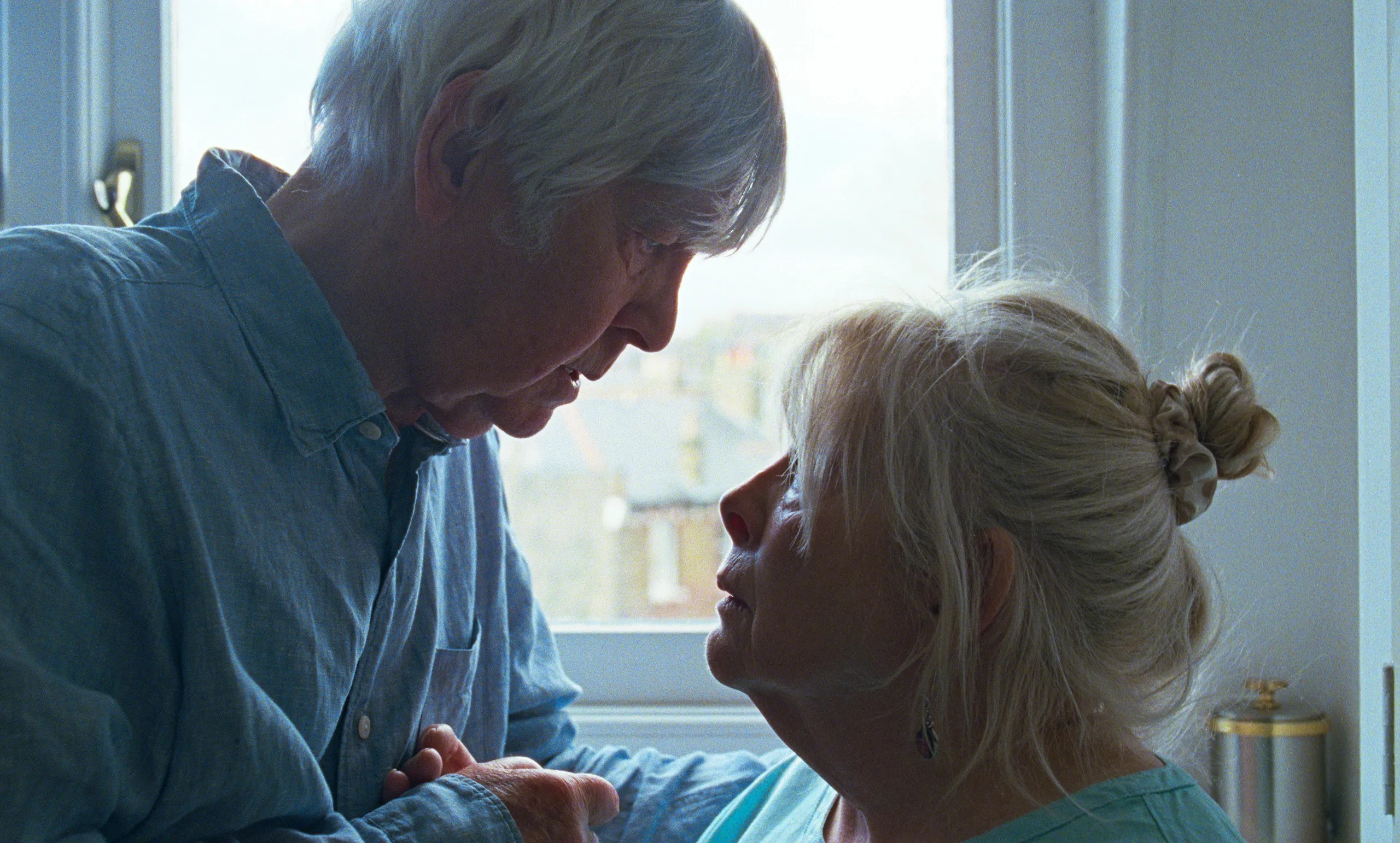
Amanda came to London for her sabbatical year, with her own daughter Sara (Florence Hunt), who is simultaneously going through adolescence and experiencing firsts in her life. Amanda is torn in two, caring for her mother while trying to be there for her daughter, and she visibly feels guilty about not fulfilling either role enough. Her daughter’s scenes, at the same time, take on substantial importance in the movie, as she lives her youth to the fullest and explores life, an apparent opposite to Leslie’s diminishing life. Hammer alternates smoothly between the scenes of Leslie and those of Sara, who plays only a passive role in her grandmother’s life, and always at the right time, we are struck by this bitter polarity.
The film is intentionally filled with concurrent opposites like Leslie and Sara, and with concurrent right and wrong decisions that confuse the audience about what to think of the characters and the situations. It relies heavily on this confusion, and it is one of the aspects that make the film feel terribly real. Martin and Amanda have rather different views of what is right for Leslie, and both, in their own ways, undoubtedly love her.
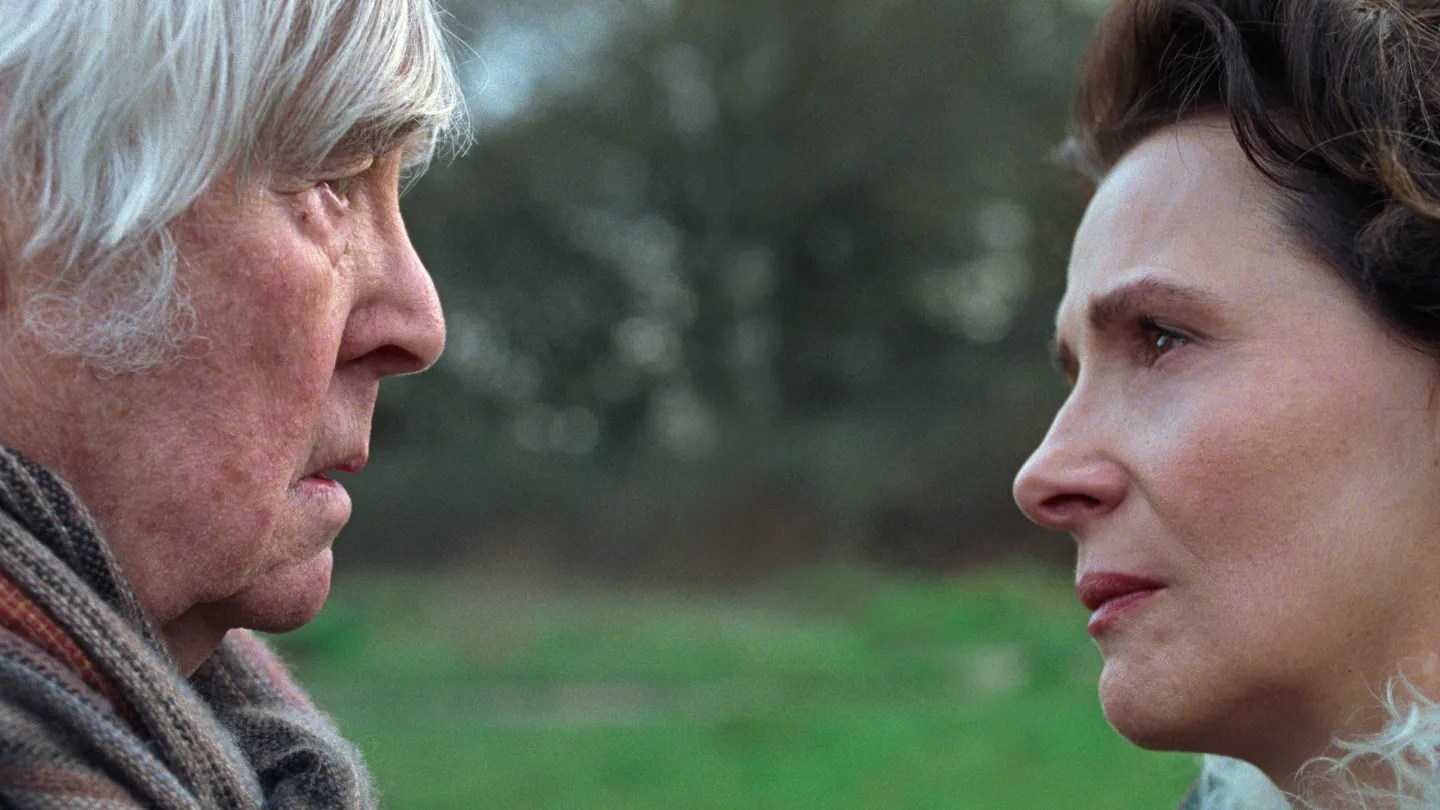
Hammer uses all elements in the film to his advantage, connecting everything around consent and decisions, with detailed minimalistic scenes, shot on 35mm by Adolpho Veloso, which carry a heaviness in themselves, and move at a satisfyingly steady pace throughout the film. While assembling these masterful elements, he also gives ample space for the actors to bring alive these characters whom the audience deeply connects with. Juliette Binoche is, unsurprisingly, excellent, portraying a woman who has to be a mother and a daughter, and who sometimes has to make the tough calls at times when no one will. Tom Courtenay stirs our hearts with his intimate portrayal of love, patience, and acceptance, where he conveys, with his heartbreaking acting, the feelings of denial and ultimate surrender for love. And the queen herself, Anna Calder-Marshall, who shared the Silver Bear for Best Supporting Performance with Courtenay at the Berlinale, plays the part of a woman slowly fading. Through her fearful eyes, we watch a woman incapable of consent but also afraid of losing it, and this might be one of the best portrayals of a person suffering from dementia.
Directed by Lance Hammer
Written by Lance Hammer
Cinematography by Adolpho Veloso
Starring Juliette Binoche, Tom Courtenay, Anna Calder-Marshall, Florence Hunt

Leave a Reply